








How to choose a Pearl mining pool
Last updated: 18 November 2026
The criteria worth comparing between mining pools: fee, payout scheme, minimum, servers, sign-up and transparency, with this pool's own answers to check.
How should you use this page?
This page lists the criteria worth comparing between pools, with our own current answers. You can check each answer and hold it against any other pool.
It is not an attack on other pools. Every pool's numbers change, so read them from each pool's own site.

Which numbers should you compare?
- Fee: what the pool keeps from rewards. Here, there is one flat fee on pool blocks and one on solo blocks. Both are shown live on the pool statistics. A native payout carries no other charges. A payout converted to Bitcoin or Monero also pays the exchange's fees and its own network fee. A fee change never applies to blocks already found.
- Payout scheme: how rewards are split. Ours is shown on the HeroMiners hub, on the All Pools overview, so you can check it rather than take our word for it. A proportional scheme pays your share of each block the pool finds. PPS+ credits you per share and shares transaction fees on top.
- Payout frequency and minimum: how often you are paid, and from what balance. Here, payouts run automatically every hour once your confirmed balance reaches the minimum payout shown on the site. A payout converted to Bitcoin or Monero is sent once a day.
Which qualities should you compare?
- Server proximity: a region close to your rigs keeps stale shares low. A stale share is work that arrives after the network has moved to a new block. Here, there are servers in many regions around the world, and a latency test picks the closest for you.
- Registration model: an account is something to secure and something to lose. Here, there is no account and no sign-up. Your wallet address is your login and your payout destination.
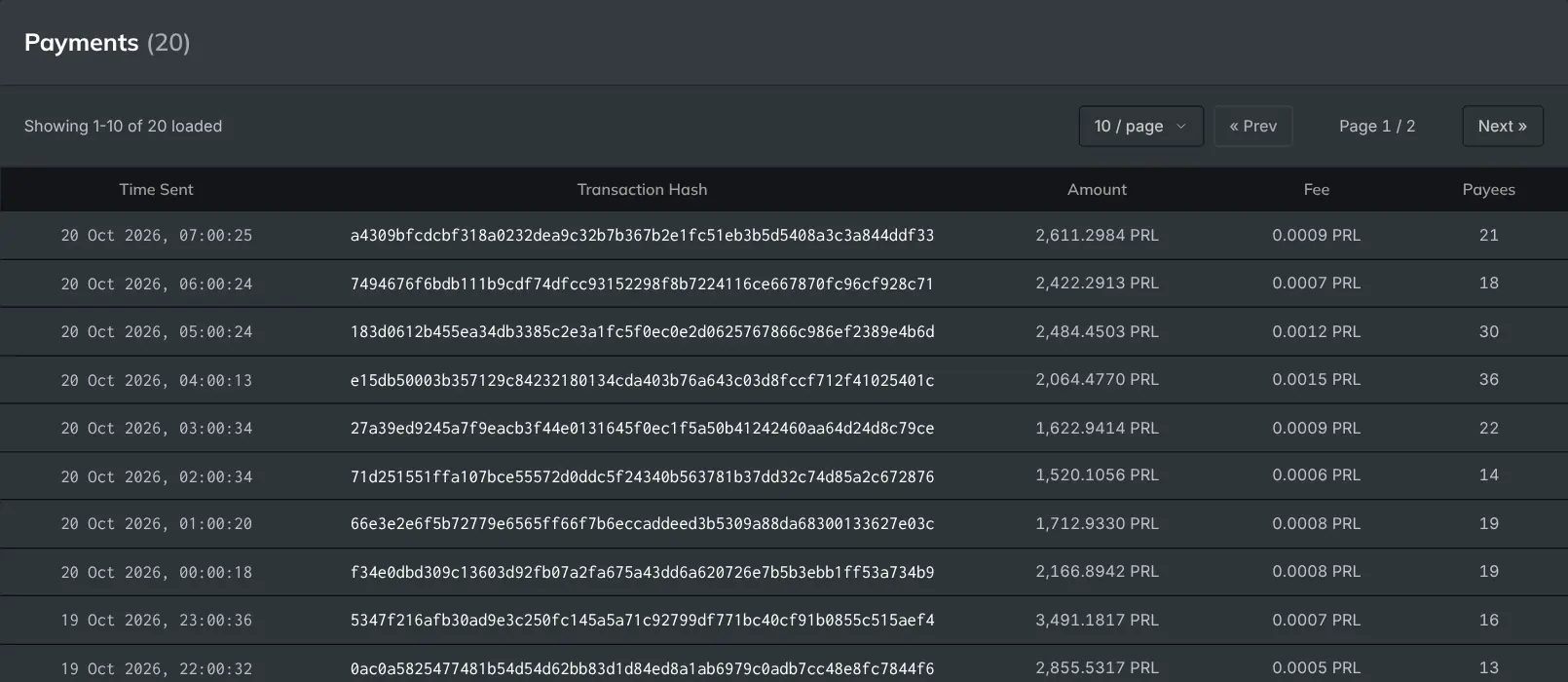
- Transparency: whether you can verify what the pool claims. Here, blocks, payments and per-miner stats are public. Every payout can be checked on the Pearl block explorer by its transaction hash.
- Connection options: TCP and TLS (encrypted) on the same port. There are also alternative routes and proxies for networks where mining domains are blocked.
What should you check, whichever pool you choose?
- Read the same numbers from each pool's own pages.
- Prefer claims you can verify on-chain over marketing copy.
- Re-check them now and then, because fees and minimums do change.
- If a claim cannot be verified anywhere, treat it as absent.
Ready to put this into practice?
The How to Mine guide picks your closest server and builds your exact miner command.