








What is crypto mining?
A plain-English guide to how mining secures a blockchain, why it pays you in coins, where new coins come from, and how Pearl's useful work fits in.
What is crypto mining, in one sentence?
Crypto mining is using a computer to do the work that keeps a blockchain running, and getting paid in that coin for it.
Your machine competes to produce the next valid block. When the network accepts a block, its reward goes to whoever produced it.
Why is the mining work needed?
A blockchain has no central server deciding which transactions are real. Instead, producing a block requires provable computational work. That makes rewriting history far too expensive to try.
This is what "proof of work" means. The chain trusts the version of history that the most work stands behind.
Where do mined coins come from?
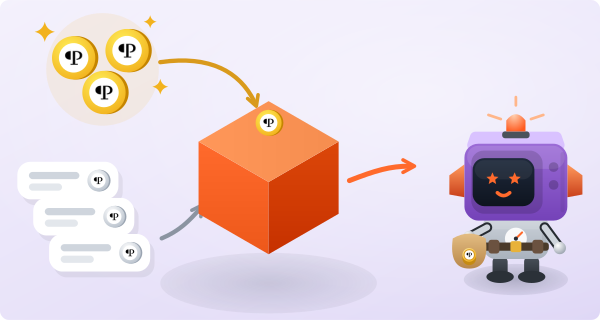
Each block carries a reward made of two parts.
- Newly issued coins.
- The fees of the transactions the block includes.
That reward is the incentive to mine. It is also how new coins enter circulation.
On Pearl, the reward is highest near launch and decreases smoothly over time.
What makes Pearl different: useful work
Classic mining spends its energy on a pure guessing game.
Pearl uses Proof of Useful Work. The same energy performs real matrix computations, the maths behind AI and science. These results are then proven correct.
You still mine with a GPU and still earn coins. The difference is that the work has value beyond the chain.